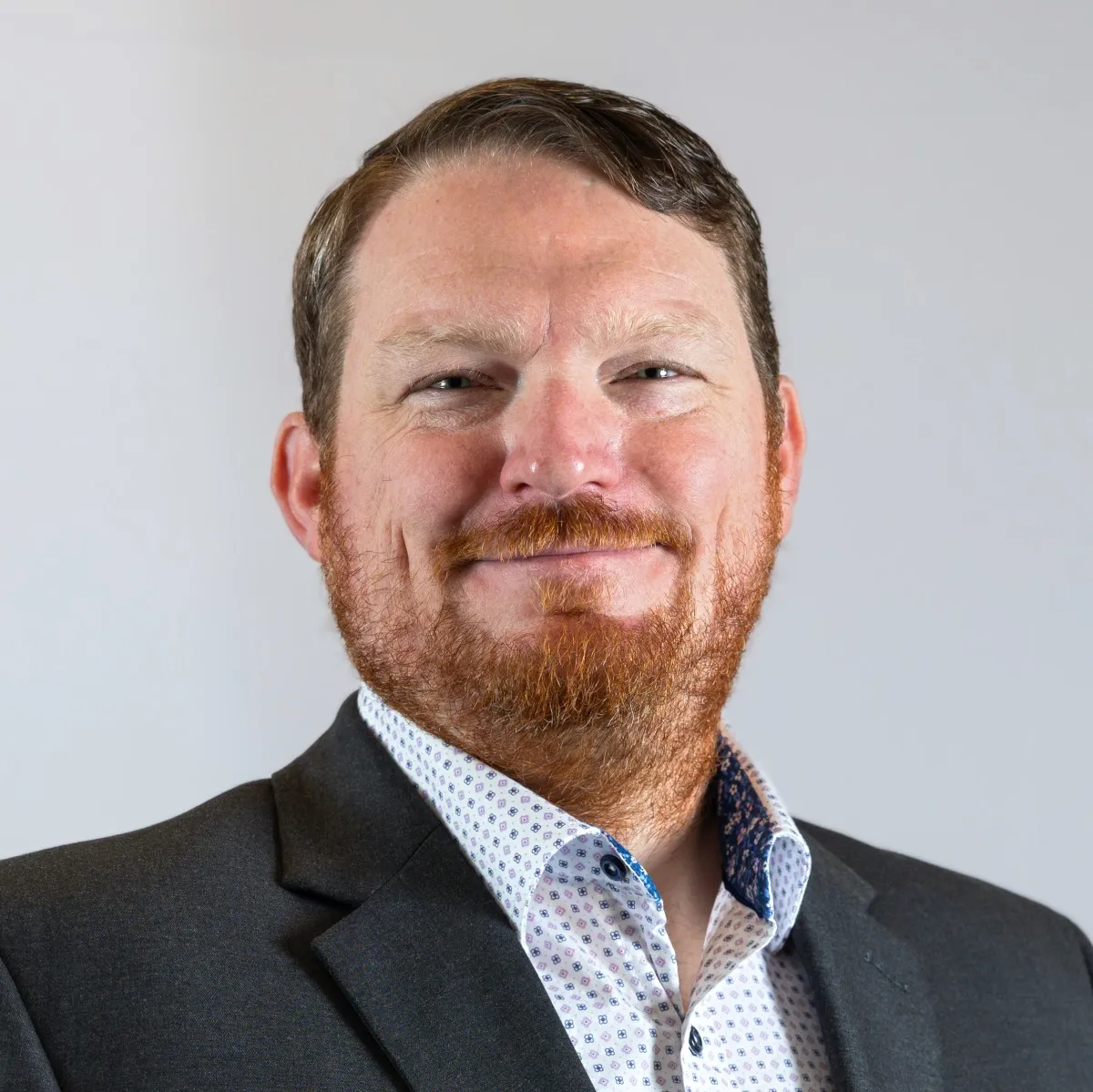
Thomas J L Mustard Ph.D.
Staff Technical Product Manager · Spokane, WA
Summary
Product leader at the intersection of deep computational science, AI platform strategy, and drug discovery. Proven track record of translating proprietary scientific capabilities, from Large Quantitative Models to DFT-based screening workflows, into standardized, enterprise-ready products. Builds and ships at the interface of ML engineering, computational chemistry, and life sciences, closing the loop from experiment to model to actionable decision. A skilled cross-functional leader who speaks the language of the scientist, the ML engineer, and the C-suite.
Skills
agentic ai
Agentic Workflows, Model Context Protocol (MCP), Large Quantitative Models (LQMs), A2A Interactions, API-First Microservices
product strategy
Product Vision, Product Road Mapping, Go-to-Market (GTM) Strategy
leadership
Cross-functional Team Leadership, Stakeholder Management, Technical Project Management
computational methods
Density Functional Theory (DFT), Molecular Dynamics (MD), Free Energy Perturbation (FEP), Multiscale Simulation
technical scientific
AI / Generative AI, Computational Chemistry, Materials & Drug Discovery, Applied Machine Learning, Cheminformatics, QSAR/QSPR Modeling
Experience
SandboxAQ
Staff Technical Product Manager
Jan 2025 – Present
- Defined the product vision and multi-quarter roadmap for a foundational Agentic AI platform designed to be agnostic, serving both the company's drug and materials discovery divisions and aligning engineering efforts with C-level business objectives.
- Architects parallel R&D operating models that synchronize scientific exploration with commercial product readiness to accelerate time-to-market. Established a hybrid release strategy balancing public scientific thought leadership with IP-protected revenue streams.
- Deploys proprietary multi-agent systems as the primary consumption layer for AI Building Blocks, facilitating dynamic composition of models and data APIs to enable customers to solve complex, multi-step scientific problems.
- Defines the roadmap for Model Context Protocol (MCP) servers, positioning proprietary models as specialized, domain-specific tools that foundational LLMs (Anthropic, Gemini, OpenAI) call dynamically.
- Prototyped and defined the UX for a multi-agent drug discovery workflow system, designing a chat interface that enables medicinal chemists and molecular design scientists to execute complex multi-step computational workflows through natural language prompts.
- Architected and deployed an AI-powered invention disclosure workflow that transformed document generation from a 2-week manual process to a sub-1-day automated pipeline, enabling the IP team to scale throughput without adding headcount.
Schrödinger
Technical Product Manager (Principal Scientist II)
Jun 2015 – Jan 2025
- Defined and executed the product vision, strategy, and roadmap for the catalysis and reactivity portfolio. Spearheaded the creation and launch of the flagship AutoRW automated workflow from initial concept through market launch, securing customer co-funding by pitching the full end-to-end vision. Prior to AutoRW, fewer than 100 people worldwide were properly trained to perform computational catalyst screening manually; AutoRW democratized the workflow, enabling bench chemists to test 10x more candidates at 10–20% of their working hours.
- Demonstrated AutoRW's enterprise scalability through rigorous benchmarking, showing enterprise deployment enabled screening of 2,000+ catalysts per year at approximately 12x cost efficiency versus experimental synthesis and testing.
- Trained and supported pharma and biotech clients across the full DMTA cycle within LiveDesign, covering structure generation via R-group and reaction-based enumeration, property calculation workflows including docking, QSPR ML models, and FEP, and downstream analysis tooling.
- Executed a structured four-stage product discovery process: informal discovery sessions, formal stakeholder interviews, storyboard-driven presentations to engineering, and coordinated alignment meetings producing official PRD documents driving ticket generation and engineering sprints.
- Led the successful integration of AutoRW into the LiveDesign enterprise SaaS platform, securing deployments with Fortune 50 clients and establishing the company's position in the catalysis market.
- Built the catalysis market vertical from the ground up, establishing Schrödinger's presence in homogeneous and organometallic catalysis through hands-on customer engagements, scientific demonstrations, and product co-development.
Oregon State University
Graduate Research Assistant
Sep 2010 – Jun 2015
- Designed and built Eta_Scripts, an open-source automation framework including
nPersistentOTS.py(automated transition state searching) andnMap.py(semi-automated reaction coordinate mapping), which seeded the automated catalysis screening concepts that directly prefigured AutoRW. - Applied DFT to elucidate mechanisms and origins of selectivity in transition-metal-catalyzed reactions (Rh, Cu, Pd), published in JACS, ACS Catalysis, and Angewandte Chemie.
- Conducted free energy perturbation (FEP) and molecular dynamics (MD) simulations on rifampicin derivatives to evaluate binding affinities, building multiscale simulation experience that later informed hybrid MD/DFT workflows.
Education
Ph.D. in Chemistry
Oregon State University
Specialized in automating and enhancing efficiency of organometallic catalysis mechanism elucidation and materials property prediction
B.S. in Chemistry
Eastern Washington University
Patents & Inventions
- "Generating Traces Representing Operations of Multi-Agent Artificial Intelligence Systems" — Patent Pending (Filed Dec 2, 2025)
- "Generating and Executing Computational Graphs Using Artificial Intelligence Agents" — Patent Pending (Filed Dec 4, 2025)
- "Optimizing Execution of Computational Graphs" — Filing Imminent
Selected Publications
- Dub, P. A.; Hughes, T.; Mustard, T. "A Software Framework for Physics- and AI-Driven Homogeneous Catalyst Design and Reactivity Optimization." ChemRxiv, 2025. DOI
- Allam, O.; Wander, B.; Kim, S.; Plesch, R.; Sours, T.; et al.; Mustard, T. J.; et al. "AQCat25: Unlocking spin-aware, high-fidelity machine learning potentials for heterogeneous catalysis." arXiv, 2025. arXiv:2510.22938
- Mustard, T. J. L.; Afzal, M. A. F.; Sanders, J. M.; et al. "Multiscale modeling of polymers: Leveraging reaction kinetics for structural morphology and property prediction." Sampe neXus, 2021. DOI
- Sanders, J. M.; Misra, M.; Mustard, T. J.; et al. "Characterizing moisture uptake and plasticization effects of water on amorphous amylose starch models using molecular dynamics methods." Carbohydrate Polymers, 2021, 252, 117161. DOI
- Tsuchiya, Y.; Tsuji, K.; Inada, K.; et al.; Mustard, T. J.; et al. "Molecular design based on donor-weak donor scaffold for blue thermally-activated delayed fluorescence designed by combinatorial DFT calculations." Frontiers in Chemistry, 2020, 8, 403. DOI
- Matsuzawa, N. N.; Arai, H.; et al.; Mustard, T. J.; et al. "Massive theoretical screen of hole conducting organic materials in the heteroacene family by using a cloud-computing environment." J. Phys. Chem. A, 2020, 124, 1981–1992. DOI
- Mattson, E. C.; Cabrera, Y.; et al.; Mustard, T. J.; et al. "Chemical modification mechanisms in hybrid hafnium oxo-methacrylate nanocluster photoresists for extreme ultraviolet patterning." Chem. Mater., 2018, 30, 6192–6206. DOI
- Wills, L. A.; Qu, X.; Chang, I. Y.; Mustard, T. J.; et al. "Group additivity-Pourbaix diagrams advocate thermodynamically stable nanoscale clusters in aqueous environments." Nature Communications, 2017, 8, 1–7. DOI
- Mustard, T. J.; Wender, P. A.; Cheong, P. H. Y. "Catalytic efficiency is a function of how rhodium(I) (5+2) catalysts accommodate a conserved substrate transition state geometry." ACS Catalysis, 2015, 5, 1758–1763. DOI
- Gould, E. et al. "Catalyst selective and regiodivergent O-to C- or N-carboxyl transfer of pyrazolyl carbonates." Chemical Science, 2014, 5, 3651–3658. DOI
- Yang, Y.; Mustard, T. J.; Cheong, P. H. Y.; Buchwald, S. L. "Palladium-Catalyzed Completely Linear-Selective Negishi Cross-Coupling of Allylzinc Halides with Aryl and Vinyl Electrophiles." Angew. Chem. Int. Ed., 2013, 52, 14098–14102. DOI
- Mustard, T. J.; Mack, D. J.; Njardarson, J. T.; Cheong, P. H. Y. "Mechanism and the origins of stereospecificity in copper-catalyzed ring expansion of vinyl oxiranes." J. Am. Chem. Soc., 2013, 135, 1471–1475. DOI
- Pattawong, O.; Mustard, T. J.; Johnston, R. C.; Cheong, P. H. Y. "Mechanism and Stereocontrol: Enantioselective Addition of Pyrrole to Ketenes Using Planar-Chiral Organocatalysts." Angew. Chem., 2013, 125, 1460–1463. DOI